I paint vibrant, texturized abstractions of water stains and mold because I am endlessly fascinated with water’s loving indifference to humans. Since I was a child, I have always felt most loved when underwater. But as I age, I have begun to notice, and become frustrated by, water’s indifference.
Water charts its path from sky to sea—with zero regard for the ceiling, the floor tiles, the bread loaf, the car trunk—taking gravitational advantage of the built environment to aid its cycle. It neither laughs nor grumbles at our silicone caulking, regrouting, or dehumidifying. It simply falls, permeates, rejoins itself, and returns.
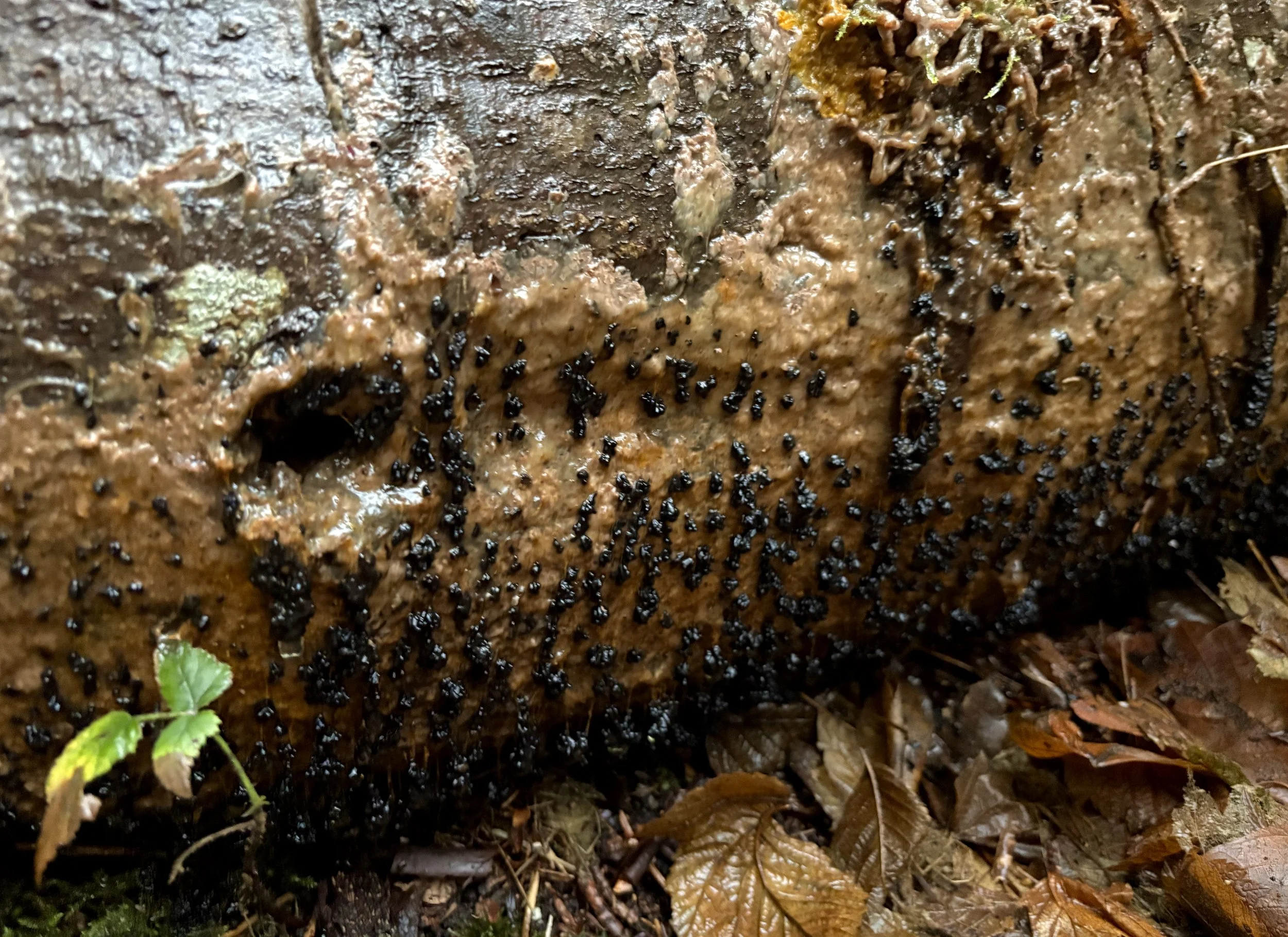
Then follows its opportunistic ally: mold. Mold’s motives are similar to water’s, but different. It is erosive, but also hungry. There in the timber framing, under the tiles, between the slices, in the upholstery, it feasts. It, like us, eats until it dies. But mold always leaves some of itself behind, waiting for water’s return to begin the cycle again.
It is folly to think we can stop water or mold. They have always been here and will remain long after us. All I, or any of us, can aim to do is enter into a temporary relationship with them.
As an artist, I do so by working with diluted paint on textured, absorbent surfaces. I pour, spray, and dam my paint but must relinquish control back to the water. The remaining paint stains document water movement and provide a ground onto which I can paint and sculpt real and imagined fungi.
My paintings are reverential odes to these natural cycles. Through these pieces, I chase control only to surrender it, entering into a temporary collaboration with forces that shape life while remaining utterly indifferent to human desires.